If you’re just starting Free Fire, one of the first things you’ll hear about is sensitivity settings. It sounds technical, but it’s really just how fast your screen moves when you swipe. Get it right, and your aim feels smooth. Get it wrong, and you’ll swipe too much or too little, missing every shot. This guide is for absolute beginners – no jargon, no complicated math. By the end, you’ll have a solid sensitivity setup that works on any phone, and you’ll know how to tweak it as you improve.
We’ll start with the default settings from the game, then adjust each slider step by step. I’ll also share the values that work for most new players – these are based on the recommended free fire sensitivity settings from our other guide. You don’t need any special tools, just your phone and a bit of patience. Let’s dive in!
What You’ll Need
- A phone or tablet running Free Fire (any model, even low-end)
- The latest version of Free Fire installed (updates can reset settings)
- A stable internet connection (to avoid lag while testing)
- Around 15 minutes of free time
- A practice match or the training ground in Free Fire
Step 1: Open the Sensitivity Menu
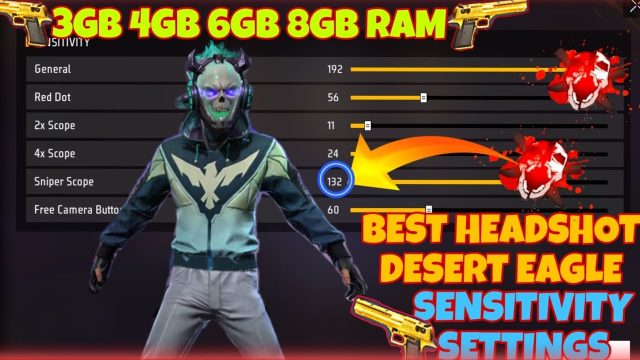
First, launch Free Fire and go to the main lobby. Tap the “Settings” gear icon in the top-right corner. Then select the “Sensitivity” tab. You’ll see a list of sliders: General, Red Dot, 2x Scope, 4x Scope, Sniper Scope, and Free Look. Don’t panic – we only need to focus on a few for now.
Step 2: Reset to Default (Optional but Recommended)
If you’ve been messing with settings before, tap “Reset” at the bottom to start fresh. If you’ve never touched them, you’re already on default. Defaults vary by phone, but they’re usually too high for beginners. We’ll lower them.
Step 3: Set Global Sensitivity (The Most Important Slider)
The “General” slider controls your overall look speed – how fast the camera moves when you swipe anywhere on the screen. For beginners, start at 60. This is a balanced number that lets you turn around quickly without losing control. If you have a bigger phone screen, you might prefer 55. For smaller screens, 65 is okay. After setting it, go to the training ground and practice flicking to targets. If you overshoot, lower it. If you can’t keep up, raise it by 5.
Step 4: Adjust the Red Dot and 2x Scope Sensitivity
These are for weapons with red dot sights or 2x scopes (most ARs and SMGs). Set both to 50 to start. This keeps your aim steady while allowing reasonable speed. Practice aiming at moving targets in training mode. If your crosshair shakes too much, reduce by 5. If it feels sluggish, increase by 5. For recoil control, these settings work well with the free fire sensitivity settings for recoil control article we have.
Step 5: Set 4x and Sniper Scope Sensitivity
For scopes with more zoom, you need slower sensitivity for precision. Set 4x Scope to 30 and Sniper Scope to 20. These values help you hold on target without jitter. If you’re using a sniper rifle a lot, you might drop it further to 15. Don’t worry about Free Look for now – leave it at default 50.
Step 6: Test and Tweak with the Sensitivity Tester
Free Fire has a built-in tool to test your sensitivity. Go to the training ground and tap the “Sensitivity Tester” button (a crosshair icon). It will run you through a series of targets. Watch for overcorrection or slowness. Adjust each slider by 5 until you feel comfortable. You can also use our free fire sensitivity settings tester guide for more detailed steps.
Step 7: Fine-Tune with Gyroscope (Optional)
If your phone has a gyroscope, you can enable it for finer aim control. Go to Settings > Sensitivity > Gyroscope. Turn it on and set gyro sensitivity to 30 for general. This lets you tilt your phone to aim, great for recoil control. But if you’re a beginner, skip this for now and get comfortable with touch first. Later, you can check our guide on how to use gyro in free fire sensitivity settings.
Common Pitfalls
- Copying pro players’ settings blindly: Pros have godly muscle memory. Their high sensitivity (80+) will make you spin wildly. Start low and work up.
- Changing everything at once: Adjust one slider, test it, then move on. Changing all at once makes it impossible to know what worked.
- Ignoring your phone’s performance: A laggy phone with high sensitivity feels awful. If you have a midrange device, stick to 60-70 general max. For overheating phones, see our free fire sensitivity settings for overheating phones guide.
Where to Next?
You now have a beginner-friendly sensitivity setup. As you improve, you can explore custom free fire sensitivity settings to match your playstyle. Also check our guides for specific phones and recoil control. Remember: sensitivity is personal – what works for your friend might not work for you. Keep tweaking, keep practicing, and you’ll see your K/D climb. Good luck out there!