If you’re tired of missing shots or struggling to control recoil in Free Fire, you’ve come to the right place. This guide is for every motivated beginner who wants to improve their aim without copying pro settings blindly. We’ll walk you through the entire process of finding your perfect sensitivity — from resetting defaults to fine-tuning each scope — so you can dominate matches with confidence.
By the end of this tutorial, you’ll have a custom sensitivity setup that feels natural for your playstyle. Whether you’re going for headshots, mastering spray control, or trying a claw grip, these steps will give you a solid foundation. Let’s dive in.
What You’ll Need
- Free Fire or Free Fire Max installed on your device
- A stable internet connection (at least 50ms ping or lower)
- 5–10 minutes in Training Ground or Clash Squad practice mode
- Patience — don’t expect magic in one round
Step 1: Reset to Default Sensitivity
Before tweaking anything, go to Settings > Sensitivity and tap ‘Reset to Default’. This clears any messy adjustments you’ve made before and gives you a clean slate to build on. Most pros start from default because it’s a balanced middle ground.
Step 2: Understand the Sensitivity Sliders
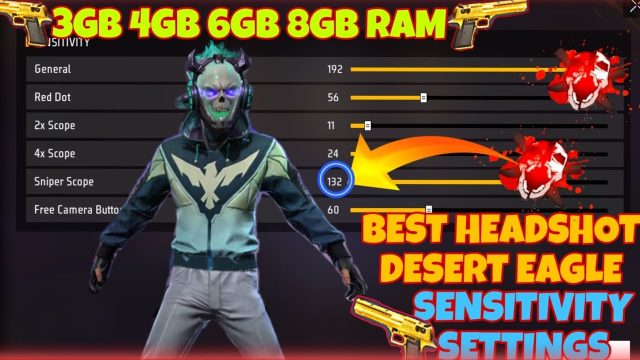
There are seven sliders: General (hip-fire), Red Dot, 2x Scope, 4x Scope, Sniper Scope, Free Look, and Gyroscope (if enabled). General sensitivity controls your overall turning speed when not aiming down sights. Scope sensitivities affect how fast you move while scoped. Free Look lets you look around while running. For now, ignore Gyroscope unless you’re comfortable with motion controls.
Step 3: Set Your Device DPI (Optional but Recommended)
DPI (dots per inch) affects how sensitive your touch screen is. Higher DPI means more precision but can feel sluggish if too high. Some devices let you change DPI in Developer Options. Check our free fire sensitivity settings and dpi combo guide for a detailed walkthrough. If you can’t change DPI, skip this step — the in-game sliders will still work fine.
Step 4: Find Your General Sensitivity
Go to Training Ground and equip an AR like M4A1 or AUG. Start with General Sensitivity between 70–80. Move around and try to track a stationary target. If you overshoot, lower it; if you can’t keep up, raise it. You want to be able to do a 180-degree turn with one full swipe from left to right. This is your hip-fire base.
Step 5: Fine-Tune Scope Sensitivities
Now adjust each scope: Red Dot and 2x should be slightly lower than General (60–75). 4x and Sniper should be much lower (40–55) for stable long-range shots. Focus on recoil control — if your crosshair bounces wildly, reduce the sensitivity. For a deep dive into controlling recoil, check our free fire sensitivity settings for spray control guide. Test each scope by spraying a wall at 20m and adjust until you can keep the bullet spread tight.
Step 6: Test in Real Combat (Clash Squad or Classic)
Jump into a Clash Squad match (or Classic if you have time) and play three to five rounds with your new settings. Don’t change anything during the match — just note what feels off. After the match, adjust only one or two sliders at a time. Repeat until your aim feels fluid and natural. Remember, muscle memory takes time, so stick with a setup for at least a day before big changes.
Step 7: Save Your Settings (Export)
Once you’re happy, go to Settings > Sensitivity and tap ‘Export Code’. This generates a backup code you can share or reuse. Save it in a notes app or share it with friends. If you ever need to restore, just import the code. For a step-by-step on saving and sharing, read how to export free fire sensitivity settings.
Common Pitfalls
- Copying pro settings blindly — pro players use high DPI and different devices; their settings won’t work for you unless you have the same setup. Instead, use their settings as a reference, then adjust. Check our esports free fire sensitivity settings to understand the numbers.
- Changing too many settings at once — alter only one slider per session (e.g., just General or just Red Dot). If you change everything, you won’t know what’s working.
- Ignoring device differences — a low-end phone with 60Hz screen can’t handle high sensitivity as smoothly as a 120Hz flagship. Also, DPI matters. If your aim feels jittery, lower the sensitivity or cap your frame rate.
Where to Next
You now have a personal sensitivity that’s already better than most beginners. Want to take it further? Try a claw grip for faster movement — our free fire sensitivity settings with 3 finger claw guide will help. Or if you prefer an all-around setup, check the free fire sensitivity settings balanced sensitivity article. And for that sweet headshot consistency, don’t miss free fire sensitivity settings for headshots. Happy fragging!