You’ve been playing Free Fire for a while, and you’re tired of missing shots or losing close-range fights. You know sensitivity settings are the key, but the default sliders feel off. This guide is for intermediate players who want to move beyond cookie-cutter settings and dial in their aim for competitive play. By the end, you’ll have a personalized sensitivity profile that minimizes recoil, speeds up your flicks, and feels natural across all ranges.
We’ll cover everything from general sensitivity to gyroscope tweaks, red dot scoping, and testing methods. No fluff—just actionable steps you can try right now. Whether you’re a claw player or a thumb user, these techniques will help you find your sweet spot. Ready to level up? Let’s get started.
What You’ll Need
- Your phone or tablet with Free Fire installed
- Around 20–30 minutes of uninterrupted practice time
- A notepad or notes app to record your settings
- Access to the Training Ground (in-game)
- Patience—perfecting sensitivity is an iterative process
Step 1: Understand the Sliders and What They Control
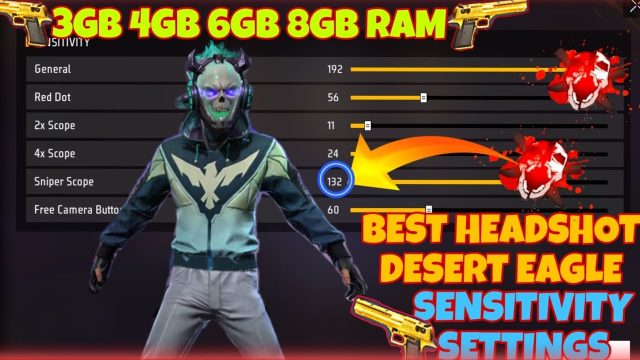
Before you start tweaking numbers, you need to know what each slider actually does. Free Fire’s sensitivity menu has five main categories: General, Red Dot, 2x Scope, 4x Scope, and Sniper Scope. There’s also a separate Gyroscope section if you play with motion controls. General sensitivity affects your hip-fire aim and overall camera movement. The scope sliders only kick in when you’re aiming down sights with that specific scope. Higher numbers = faster rotation, lower numbers = slower, more precise movement.
Step 2: Start with a Proven Baseline
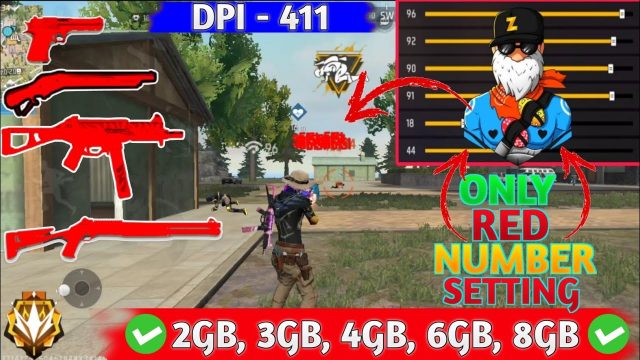
Don’t start from scratch. Use a known baseline that works for most devices. For a 90–100 FOV, try General: 85–90, Red Dot: 80–85, 2x: 70–75, 4x: 50–60, Sniper: 30–40. If you use gyroscope, set it to around 30–40 for now. These numbers give you a fast hip-fire for close combat and slower scopes for long-range control. Write them down—you’ll adjust them later. For more baseline ideas, check out the perfect free fire sensitivity settings guide.
Step 3: Fine-Tune General Sensitivity for Your Playstyle
Go to Training Ground and grab a weapon like the M1887 or MP40 for close range. Stand close to a still target and try to track a single spot while moving. If your crosshair overshoots, lower General sensitivity. If you can’t keep up with a strafing dummy, increase it. The goal is to track smoothly without jitter. For aggressive players who like rushing, a higher General sensitivity (90–100) works best—that’s where free fire sensitivity settings for fast players come in. For tactical players, 75–85 gives more control.

Step 4: Adjust Red Dot and Scope Sensitivity for No Recoil
Now equip an AR like the AK or M4 with a Red Dot. Aim at a wall and fire a full magazine without compensating for recoil. Watch the spray pattern. If the bullet climb is too steep, >increase< your Red Dot sensitivity slightly (3–5 points). This makes your aim drift upward faster, helping you counter the recoil naturally. For longer ranges with a 2x or 4x scope, use the same method but aim at a far target. The goal is to achieve a tight grouping. For a deep dive into eliminating recoil, see our free fire sensitivity settings no recoil guide.
Step 5: Master the Gyroscope for Precision Aiming
Gyroscope lets you aim by tilting your phone—super useful for micro-adjustments. If you haven’t used it before, start with a low setting (20–30) and practice in Training Ground. Tilt your phone left/right to track a moving target. If you feel too sensitive, lower it; if you need more range, increase it. Many pros use separate gyro sensitivities for each scope. For example, set General Gyro at 30, Red Dot Gyro at 40, and lower for scopes. For a full setup, check our free fire gyroscope sensitivity settings guide.
Step 6: Test in Real Combat Scenarios
Head into Clash Squad or a regular BR match. Focus on one gunfight at a time. After each match, ask yourself: Did I overshoot close-range? Could I track the enemy? Did my scoped aim feel too slow? Adjust one slider at a time—don’t change multiple things at once. Keep tweaking until all ranges feel comfortable. If you find you’re constantly adjusting, consider saving your current settings as a custom preset. Our free fire custom sensitivity settings guide shows you how to save and swap profiles.

Common Pitfalls
- Changing too many settings at once—you won’t know what works. Change one slider per session.
- Copying pro settings without understanding your own playstyle. Their high sensitivity might make you miss everything.
- Ignoring your device’s performance. Lower-end phones may drop frames with high sensitivity; if you experience lag, reduce settings and enable game booster.
Where to Next
Once you’ve dialed in your sensitivity, focus on other aspects like crosshair placement and movement. For close-range domination, check out our free fire sensitivity settings for close range guide. If you want a one-size-fits-all preset, the perfect free fire sensitivity settings article is a great starting point. Keep experimenting, and remember: there’s no magic number—only the settings that feel right for you.