If you’re tired of jerky aim and want smoother, more precise control in Free Fire, gyroscope (gyro) is your secret weapon. Gyro lets you tilt your phone to aim, giving you finer adjustments than thumbs alone. This guide is for beginners who have heard about gyro but don’t know how to set it up. By the end, you’ll have a customized gyro sensitivity that feels natural and boosts your accuracy.
We’ll walk through enabling gyro, setting the right sensitivities, and practicing until it clicks. You don’t need to be a pro—just have a phone with a built-in gyroscope (most mid-range and above phones do). Let’s dive in and turn that shaky aim into laser beams.
What You’ll Need
- Free Fire installed on your phone
- A device with a working gyroscope (check your phone specs)
- A stable internet connection
- Patience to practice a few hours
Step 1: Enable Gyroscope in Free Fire
Open Free Fire and go to Settings (gear icon). Tap on the “Sensitivity” tab. Scroll down until you see “Gyroscope” — it’s usually near the bottom. Toggle it ON. Some regional versions might call it “Gyro” or “Tilt Aim”. That’s all for now. Don’t change any numbers yet.
Step 2: Set Your General Gyro Sensitivity
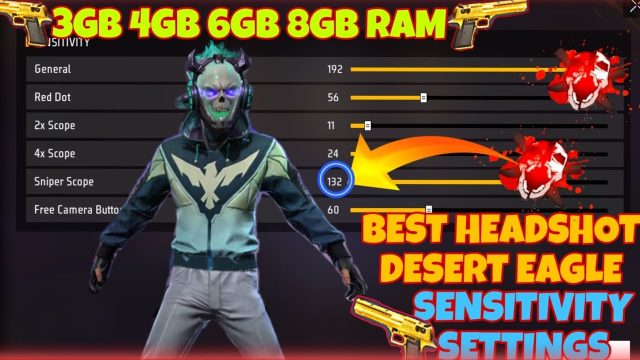
In the same Sensitivity menu, you’ll see “Gyroscope Sensitivity” with a slider (0–100). For starters, set it to 50. This is a balanced point. If you’re coming from non-gyro, 50 lets you feel the tilt without being too twitchy. Later you can adjust up or down.
Step 3: Configure Red Dot and Scope Gyro Sensitivities
Free Fire lets you set separate gyro sensitivities for different scopes. You’ll see options for Red Dot, 2x, 4x, etc. For now, match them all to your general gyro (50). Later you can lower scope sensitivities for steadier long-range shots. A common setup: Red Dot 50, 2x 40, 4x 30.
Step 4: Practice in Training Mode
Head to Training Mode. Grab an AR like the M4 or AK. Stand still and try to keep your crosshair on a target while tilting your phone. Start with large movements, then try small corrections. Don’t worry about kills — focus on feeling how gyro responds. Spend at least 15 minutes here.
Step 5: Fine-Tune Your Gyro Sensitivity
After training, you might find 50 too fast or too slow. If you overshoot targets, lower your general gyro sensitivity (try 30–40). If you have to tilt too much, increase it (60–70). Adjust scope sensitivities individually — for example, keep your Red Dot higher for close range, and scope lower for sniping. There’s no universal “best” — follow your feel. You can also check out our dedicated gyroscope sensitivity settings guide for specific numbers.
Common Pitfalls
- Too high sensitivity: This makes your aim jittery. If you can’t hold still, turn it down.
- Not calibrating your phone’s gyro: Some phones drift. Go to your system settings and recalibrate the gyroscope if needed.
- Mixing gyro and touch without practice: Don’t expect instant magic. Your thumbs still do a lot. Train both together.
Where to Next
Congratulations! You’ve got gyro enabled and a starting sensitivity. Keep practicing and tweaking. For deeper dives, check out our perfect sensitivity guide, advanced sensitivity settings, or no recoil sensitivity settings to take your aim even further. Happy tilting!