Every Free Fire update brings changes. Sometimes sensitivity settings reset to default, or the new patch tweaks the way aim and recoil feel. If you’ve logged in after an update and your shots feel off, you’re not alone. This guide is for anyone who wants to quickly recalibrate their sensitivity settings and get back to dominating the battlefield. By the end, you’ll have a custom sensitivity profile that feels natural and helps you land more headshots.
We’ll walk through each sensitivity option step by step, with screenshots to show exactly where to tap. I’ll also share common mistakes that mess up your aim and how to avoid them. Whether you play on Android or iOS, two-finger or claw, these steps will work for you.
What You’ll Need
- Free Fire or Free Fire Max installed and updated to the latest version
- 5–10 minutes of free time in the training mode or a casual match
- A calm environment to test and tweak without distractions
- (Optional) A friend to help test recoil patterns in a 1v1 room
Step 1: Open the Sensitivity Settings Menu
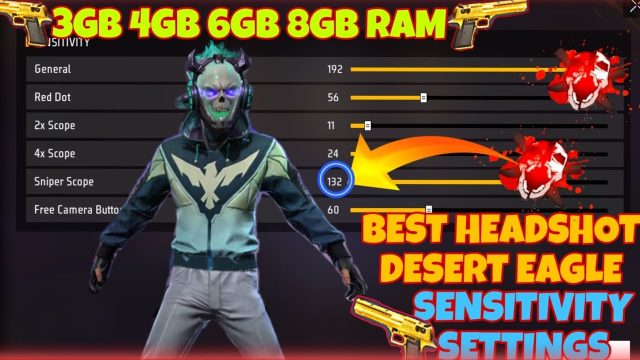
Launch Free Fire and go to the main lobby. Tap the gear icon (Settings) in the top-right corner. Then select the “Sensitivity” tab. You’ll see a list of sliders: General, Red Dot, 2x Scope, 4x Scope, Sniper Scope, and Free Look. If you don’t see these, make sure your game is fully updated. This is where all the magic happens.
Step 2: Adjust General and Red Dot Sensitivity
Start with General sensitivity. This controls your camera movement when not aiming down sights. A good starting point is around 85–95. If you use claw or have a high-end device, you can push it to 100. But for most players, 85–90 gives a good balance of speed and control. Next, set Red Dot sensitivity to around 80–90. This affects how fast you aim when using a red dot or iron sights. Test it by quickly tracking a moving target in training mode. If you overshoot, lower it; if you can’t keep up, raise it.
For more precise recommendations, check out our competitive free fire sensitivity settings guide – it has tables for different play styles.
Step 3: Tweak Scope and Free Look Settings
Now move to the scopes. For 2x scope, start at 65–75. For 4x scope, 55–65 is usually enough because higher zoom needs less movement. Sniper scope? Keep it low, around 40–50, so you can hold steady on a head. Free Look sensitivity controls how fast you look around while parachuting or gliding. Set it to 70–80 so you can spot enemies quickly without spinning out of control. Remember, these are starting points – you’ll need to fine-tune based on your device and grip.
Step 4: Test in Training Mode and Fine-Tune
Head to the training mode (tap the “Train” button on the lobby). Pick an AR like the M1887 or M4A1 and fire at the moving targets. Pay attention to recoil control – if your crosshair jumps too much, lower the sensitivity gradually. If you struggle to track the target, increase it. Do this for each scope level. Also test your flicks: snap onto a stationary target from a distance. If you consistently overshoot, reduce sensitivity; if you fall short, increase it. Repeat until it feels effortless.
Claw players might prefer higher sensitivity for faster flicks. For dedicated claw setups, see our free fire sensitivity settings for claw users guide.
Step 5: Save and Apply in Real Matches
Once you’re happy with the feel in training, tap the “Save” button (usually top-right). Then jump into a casual or ranked match. Play a few rounds and pay attention to medium-range fights – that’s where sensitivity really matters. If something feels off, go back to the training mode and adjust by 2–3 points at a time. After the latest update, the new physics might require slight tweaks even if your old settings were perfect. Don’t be afraid to experiment.
For a more comprehensive approach, our complete free fire sensitivity settings guide covers every slider in detail.
Common Pitfalls
- Blindly copying pro settings: Pros use different devices and grips. Their numbers might make you dizzy. Start from our recommended ranges and adjust to your own comfort.
- Ignoring device performance: Low-end phones with FPS drops need lower sensitivity to avoid stuttery aim. High-end devices can handle higher values. Always test on your specific phone.
- Changing too many settings at once: Tweak one slider at a time and test. If you change everything together, you won’t know what helped or hurt. Patience pays off.
Where to Next?
Now that your sensitivity is dialed in, take your aim to the next level. Check out our best free fire sensitivity settings for android if you’re on that platform. For headshot enthusiasts, our free fire sensitivity settings and headshot combo guide will help you land consistent one-taps. And if you want buttery-smooth movement, don’t miss the free fire sensitivity settings for smooth gameplay article. Happy hunting!