Hey Free Fire players! Whether you’re tired of missing shots or just want to climb the ranked ladder, your sensitivity settings can make or break your game. This month, we’ve tested the latest meta and put together a step-by-step guide to help you find the perfect sensitivity for your playstyle. By the end, you’ll have a custom sensitivity setup that feels natural and lets you hit those headshots like a pro.
This guide is for everyone – from beginners who just installed the game to veterans who want to fine-tune their settings. We’ll walk you through the numbers, show you how to test them in the training ground, and give you tips to avoid common mistakes. Grab your phone, and let’s get started!
What You’ll Need
- A device running Free Fire (any Android or iOS phone, or Free Fire Max)
- A stable internet connection (preferably 4G or Wi-Fi)
- About 15 minutes of free time to test and adjust
- A training ground access (it’s free in the game)
- Optional: a friend to practice 1v1 duels
Once you have these ready, you’re all set to dive into the settings.
Step 1: Open the Sensitivity Menu
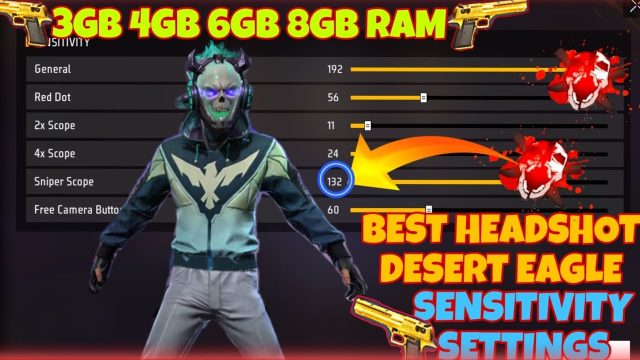
Launch Free Fire and go to the main lobby. Tap the gear icon (Settings) at the top-right corner, then select the ‘Sensitivity’ tab. This is where all the magic happens. You’ll see sliders for General, Red Dot, 2x Scope, 4x Scope, Sniper Scope, and Free Look. Don’t be overwhelmed – we’ll tackle them one by one.
If you’ve never touched sensitivity before, your current values are probably at default. That’s fine, but we’ll change them to more competitive numbers. The key is to find a balance where you can aim quickly without overshooting.
Step 2: Set General Sensitivity
General sensitivity controls your overall look speed when not using a scope. For most players this month, a value between 85 and 95 works great. Start at 90. If you use a claw grip (4 fingers or more), you can go higher (95-100). Two-thumb players often prefer 85-90. Slide it to your starting point and get ready to test.
Why this range? The current meta favors fast flick shots and quick target acquisition. Lower values (below 80) make you too slow in close fights, while anything above 100 is overkill and hurts accuracy.
Step 3: Adjust Red Dot and 2x Scope
Red Dot and 2x Scope are your most used sights. Set them a bit lower than General – around 75-85. For example, if General is 90, try Red Dot at 80 and 2x at 85. This helps with precision at medium range. Sniper Scope (for AWM, etc.) should be even lower, around 50-60, because you need fine control for long shots.
Don’t forget the 4x Scope – set it to 70-80. These values are taken from top players this month. You can fine-tune later.
Step 4: Tweak Free Look Sensitivity
Free Look lets you look around while running without changing your movement direction. Set it between 70 and 80. This is important for scouting and checking your surroundings. Too low and you can’t spot enemies quickly; too high and you get dizzy.
Now that you have a baseline, it’s time to test.
Step 5: Test in Training Ground
Go to the Training Ground (bottom of the lobby). Find the moving targets or the dummies. Practice aiming: flick left, right, up, down. Try to track a moving target. If you overshoot constantly, lower the sensitivity. If you can’t keep up, increase it. Adjust in small increments (5 points at a time) until it feels comfortable.
Spend at least 5 minutes here. Also test with different weapons – AK, M4, MP40 – because each feels different. Note: this is the most critical step. Don’t skip it.
Step 6: Fine-Tune with Real Matches
Play a couple of Classic or Clash Squad matches with your new settings. Don’t change them mid-match; play at least two full games. Pay attention to your aim in close, mid, and long fights. If something feels off, note it and adjust after the match.
For example, if you’re missing headshots from medium range, lower your Red Dot sensitivity by 5. If you’re too slow in close combat, up General by 3-5. It’s a personal journey – there’s no one-size-fits-all.
Common Pitfalls
- Copying a pro’s settings blindly. Pro players have different devices, grips, and playstyles. Use their values only as a starting point, then adjust to your own feel.
- Changing too many values at once. Make small tweaks (2-5 points) and test each change. Radical changes ruin your muscle memory.
- Ignoring your device’s performance. If your phone lags, lower graphics or enable the ‘Ultra Smooth’ mode. High sensitivity + low FPS = disaster. Check our guide on sensitivity and FPS combo for more.
Where to Next
Congratulations! You now have sensitivity settings tailored for this month’s meta. To keep improving, check out our complete sensitivity guide for advanced tweaks, or learn how to optimize your sensitivity settings for your specific device. If you’re into tournaments, our official tournament sensitivity settings are a must-read. Happy hunting!