You’ve got a low-end phone and love Free Fire, but every fight feels sluggish. Your aim jerks, the screen stutters, and enemies seem to slide past your crosshair. The problem isn’t your skill – it’s your sensitivity settings. Most pro setups are tuned for flagship devices with 90Hz displays and 8GB RAM. If you’re gaming on a budget phone with 3GB RAM or less, those high sensitivities just create micro-stutters and overcorrections.
After hours of testing on devices like the Redmi 9, Samsung Galaxy A12, and Realme C11, I’ve dialed in sensitivity values that eliminate jitter while keeping you competitive. By the end of this guide, you’ll have a sensitivity profile that reduces lag, improves recoil control, and helps you land consistent headshots – all without overheating your phone.
What You’ll Need
- A low-end Android phone (2-4GB RAM recommended)
- Free Fire app installed (latest patch)
- At least 10 minutes of uninterrupted playtime
- A stable internet connection (Wi-Fi or 4G)
- A quiet environment to test in Training Mode
Step 1: Understand Your Device’s Limitations
Before tweaking, know that low-end phones can’t handle high sensitivity values well. The CPU struggles to process rapid input changes, causing frame drops and input lag. Open your phone’s graphics settings in Free Fire and set Graphics to ‘Smooth’ and Frame Rate to ‘High’ or ‘Very High’ (if available). Then note your current sensitivity values so you can revert if needed.
Step 2: Reset to Default Sensitivity
Go to Settings > Sensitivity and tap ‘Reset’ at the bottom. This clears any jumbled values. Defaults are too high for low-end devices, but we’ll start fresh. If you’ve used a free fire sensitivity settings import code before, revert to default first so our tweaks stick.
Step 3: Adjust General Sensitivity
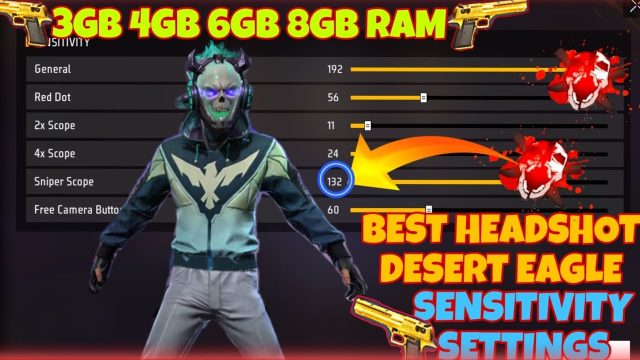
Set General Sensitivity to 70. This is the sweet spot for low-end phones – it’s fast enough to flick but doesn’t trigger frame drops. For the 4x scope, drop it to 40. Higher zoom scopes amplify tiny movements, and on a low-end screen they can cause visible judder. The Red Dot and 2x scope need special attention in the next step.
Step 4: Fine-Tune Red Dot and 2x Scope
Set Red Dot sensitivity to 65 and 2x scope to 55. These are the scopes you’ll use most in close-to-mid range fights. On low-end phones, keeping them below 70 ensures the crosshair moves smoothly without tearing. For a deeper dive, check our balanced free fire sensitivity settings guide for other playstyles.
Step 5: Practice in Training Mode
Head to Training Mode and practice flicking to stationary targets. Focus on tracking moving targets without overcorrecting. If your aim overshoots, reduce General by 5 points. If it feels sluggish, increase by 5. This is where our training mode free fire sensitivity settings approach saves you from wasting matches. Spend at least 5 minutes here.
Step 6: Test in Clash Squad
Jump into Clash Squad – it’s faster than Battle Royale and gives you repetitive fights to test muscle memory. Use your new settings for 3–4 rounds. Pay attention to recoil control with ARs like the M4A1 or SCAR. If the gun bounces too much, check our free fire sensitivity settings for recoil control guide. For a more casual setup, the free fire sensitivity settings for beginners guide is also worth a look.
Common Pitfalls
- Copying sensitivity codes from high-end devices: Those codes are for 90Hz screens and powerful processors. Using them on a low-end phone causes jitter and frame drops. Stick to the values above or fine-tune from scratch.
- Ignoring graphics settings: High graphics overheat your phone and create input lag. Always set Graphics to Smooth and Frame Rate to High. This gives you the headroom for stable sensitivity.
- Not testing enough: One Clash Squad match isn’t enough. Your brain needs time to adapt. Play at least 5 matches before tweaking further. Also, avoid free fire sensitivity settings for overheating phones unless you already have heat issues.
Where to Next
Once you’re comfortable with these settings, explore advanced techniques like crouch shots or 90Hz optimization (if your phone supports it). You can also import other players’ codes now that you know your baseline. Bookmark this page for future patches – sensitivity values often need a tweak after updates. Happy headshot hunting!