If you’re playing Free Fire on a budget phone or an older device, you probably know the struggle: low FPS makes your aim feel jerky, your sensitivity settings go haywire, and every fight feels like a slideshow. But don’t worry – you can still compete. This guide is for you – the motivated beginner who wants solid sensitivity settings that actually work on low FPS. By the end, you’ll have a custom setup that reduces jitter, improves your tracking, and makes your gameplay smoother without needing a flagship phone.
We’ll walk through everything: resetting your current settings, tweaking the graphics for better performance, lowering your sensitivity values to compensate for input lag, and fine-tuning each category (general, red dot, scope, etc.). You’ll also learn which mistakes to avoid so you don’t waste time. Let’s get your aim back on track.
What You’ll Need
- A phone running Free Fire or Free Fire Max (low FPS means around 30-45 FPS)
- Access to the in-game settings menu (gear icon on the main lobby)
- A stable internet connection (Wi-Fi or 4G, ping below 100ms)
- Optional: a gaming mode or performance mode in your phone settings
- If you’re on a Mediatek chipset, check out our dedicated free fire sensitivity settings for mediatek phones guide
Step 1: Reset Your Current Sensitivity Settings
Before we start, let’s wipe the slate clean. Go to Settings > Sensitivity and tap “Reset” (usually at the bottom). This restores default values so you don’t have any weird inheritances from previous tweaks. If you’ve already messed with your settings, this step is crucial.
Step 2: Lower Your Graphics and Resolution
Low FPS is often caused by high graphics settings. In Free Fire, go to Settings > Graphics and set everything to Smooth and Medium (not High or Ultra). Turn off shadows, anti-aliasing, and HD textures. Set the frame rate to High (if available) or Max – but if your phone still stutters, lock it to Medium. After changing graphics, restart the game to apply.
Step 3: Reduce Your Sensitivity Values (The Core Settings)
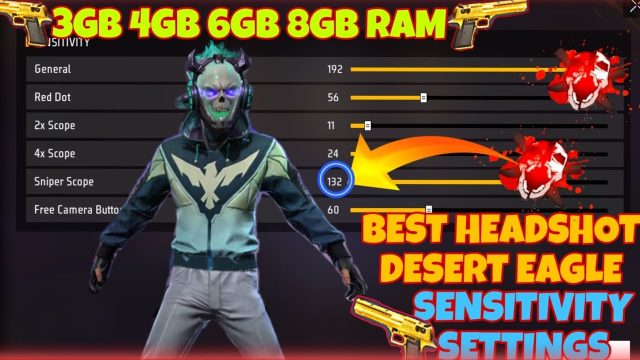
On low FPS, high sensitivity makes your aim twitchy and unresponsive. You need lower numbers to maintain control. Start with these baseline values and adjust from there. Go to Settings > Sensitivity and set: General = 60, Red Dot = 45, 2x Scope = 40, 4x Scope = 35, Sniper Scope = 30, Free Look = 35. These are lower than most high-end guides but work wonders for stability.
Step 4: Fine-Tune Each Sensitivity Category
Now it’s time to adapt the baseline to your playstyle. For close-range fights (SMG, shotgun), keep General around 60-70 – but if you over-aim, lower it to 55. For long-range (AR, DMR), Red Dot and 2x are critical; try 40-50. If you snipe a lot, Sniper Scope can go as low as 20-25 for precise flicks. For a more aggressive setup, see our free fire sensitivity settings for aim players guide. For high FPS devices, check out the free fire max sensitivity settings 2026 – but you’re on low FPS, so stay conservative.
Step 5: Practice and Adjust
Jump into the training ground or a clash squad match. Test your aim on moving targets and walls. If you’re overshooting, lower the respective sensitivity by 5 points. If you’re undershooting (can’t keep up), increase by 5. On low FPS, small changes have big impact. Repeat until you feel comfortable. For tracking enemies, we recommend our free fire sensitivity settings for better tracking guide for extra tips. Keep tweaking – it’s a process.
Common Pitfalls
- Too high general sensitivity – on low FPS, anything above 80 will cause severe jitter. Stick to 60-70 max.
- Ignoring graphics settings first – adjusting sensitivity without fixing graphics won’t solve lag. Always optimize graphics before sensitivity.
- Copying pro player settings blindly – those are tuned for 60+ FPS phones. If you use them on low FPS, you’ll lose control. Check free fire sensitivity settings for pro players only as inspiration, not direct copy.
Where to Next
Now you have a sensitivity setup that respects your low FPS. Next, you can refine your HUD layout, practice recoil control, or explore different gun combos. Remember, consistency is key – stick with these settings for at least a week before making big changes. For further reading, check out our complete guide on how to optimize free fire sensitivity settings. Good luck, and see you in the lobby!