So you just got a phone with a 90Hz display, or you’re finally ready to unlock that smoother refresh rate in Free Fire. High refresh rates make everything feel buttery—but only if your sensitivity is tuned right. This guide is for players who want to take full advantage of their 90Hz screen without overshooting or missing shots. By the end, you’ll have a custom sensitivity profile that feels natural, keeps your aim on point, and helps you control recoil like a pro.
We’re going to walk through the best sensitivity values for 90Hz displays, tested on multiple devices. You’ll learn how to adjust general, red dot, and scope sensitivities, fine-tune your gyroscope if you use it, and practice in the training ground until it clicks. Whether you’re a claw player, a two-thumb warrior, or somewhere in between, these settings will give you a solid baseline to tweak further.
What You’ll Need
- A device with a 90Hz or higher display (and Free Fire running at 90 FPS)
- Free Fire installed and updated to the latest patch
- Access to the in-game sensitivity menu (Settings > Sensitivity)
- About 15–20 minutes in the training ground to test and adjust
- Optional: a screen recorder or friend to help you analyze your aim
Step 1: Reset Your Current Sensitivity to Default
Before we start, clear out any old tweaks. Go to Settings > Sensitivity and tap the ‘Reset’ button (usually at the bottom). This gives you a clean slate. If you’ve already got a setup from a different refresh rate, it might feel off on 90Hz—trust me, starting fresh is faster.
Step 2: Set General Sensitivity (The Core Value)
General sensitivity controls your camera movement when not aiming down sights. For 90Hz, start with a value between 80 and 90. The extra smoothness of 90Hz means you can go a bit lower than you would on 60Hz without feeling slow. I recommend 85 as a baseline. Adjust by ±5 based on your comfort. If you overshoot often, lower it; if you can’t keep up with enemies, raise it.
Step 3: Adjust Red Dot and Scope Sensitivities
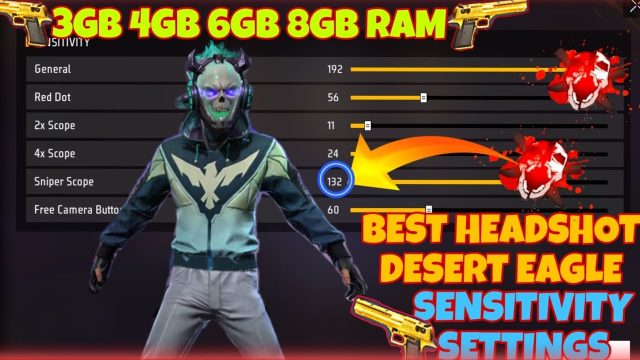
Now for the aiming sensitivities. Red dot is the most used sight, so get it right. Start with 75–80. For the 2x scope, try 70–75; for 4x, 65–70; and for the 6x (which you can zoom out), 55–65. These values work well with the 90Hz refresh because the smoother motion lets you track enemies without the jittery feeling of high sensitivity on lower frames.
Remember, these are starting points. If you use the AWM or SVD a lot, you might want to lower your 4x and 6x a bit more. The key is consistency: your muscle memory builds faster when you don’t change values every game.
Step 4: Tweak Gyroscope Sensitivity (If You Use Gyro)
Gyroscope can be a game-changer on 90Hz, especially for fine-tuning aim. If you’re new to gyro, set it to 50–60 for general and 40–50 for scope. The 90Hz screen makes gyro feel more responsive, so you don’t need high numbers. Experiment in the training room—tilt your phone slowly and see if your crosshair moves smoothly without drifting.
Step 5: Test in Training Ground and Fine-Tune
Head to the training ground (Training Mode) and practice with different weapons. Focus on three things: tracking a moving target, snapping to stationary bots, and controlling recoil. Fire a full clip at a wall with no attachments—if the bullet spread is too wide, lower your sensitivity. If you can’t keep the crosshair on a bot’s head, adjust in small increments of 2–3 points.
Use the training mode regularly. It’s the safest place to experiment without losing rank points. And don’t forget to test after every game update—patches can shift the feel. Check out our guide on after-patch settings to stay updated.
Common Pitfalls
Even with a great baseline, a few mistakes can mess up your aim. Here are the top three things that go wrong with 90Hz sensitivity setups.
- Copying settings blindly from a 60Hz guide: 90Hz feels smoother, so high sensitivity can cause over-aim. Always lower by 5–10 points compared to your old 60Hz values.
- Ignoring device performance: Not all 90Hz phones sustain 90 FPS in intense fights. If you experience frame drops, lower your sensitivity slightly to compensate for the stutter.
- Skipping the training ground: Jumping straight into ranked with new settings is a recipe for lost ranks. Spend at least 10 minutes in training mode to build muscle memory.
Where to Next
You’ve got your baseline 90Hz sensitivity set. Now it’s time to refine it. If you’re struggling with recoil, our recoil control sensitivity guide has weapon-specific tweaks. Beginners should check out the beginner sensitivity settings for a simpler starting point. For a more rounded approach, read our balanced sensitivity guide to cover all playstyles. And remember, the best sensitivity is the one that feels right after hours of practice. Happy hunting!