You’ve been playing Free Fire for a while, your movement is solid, and you can win most 1v1s – but something still feels off when you try to track an enemy sliding behind cover or flick to a headshot. That’s probably your sensitivity holding you back. This guide is for intermediate players who already know the basics and want to unlock the same kind of muscle memory that top-ranked players use. By the end, you’ll have a fully custom sensitivity profile that matches your playstyle, device, and preferred DPI – whether you use gyro or not.
We’re not just throwing numbers at you. You’ll learn why each slider matters, how to test settings in a controlled environment, and how to tweak based on your in-game feedback. If you’re still using default or copied settings without understanding them, you’re leaving kills on the table. Let’s fix that.
What You’ll Need
- Free Fire or Free Fire Max installed (latest version)
- A device with at least 60 FPS capability (preferably 90 or 120 FPS)
- A quiet practice area (training ground or Clash Squad with a friend)
- At least 30 minutes of uninterrupted time
- Optional: a friend to help you test sensitivity in a 1v1 room
- Optional: screen recorder to review your gameplay later
Step 1: Reset to Default and Understand the Sliders
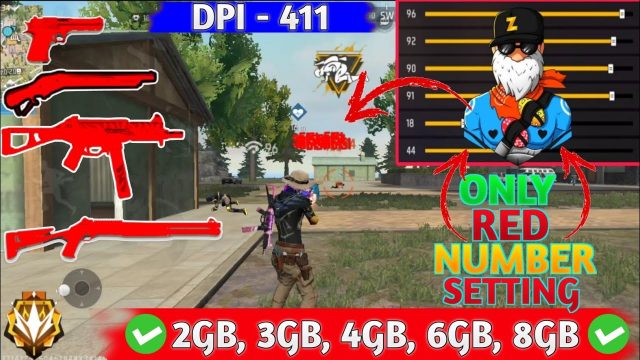
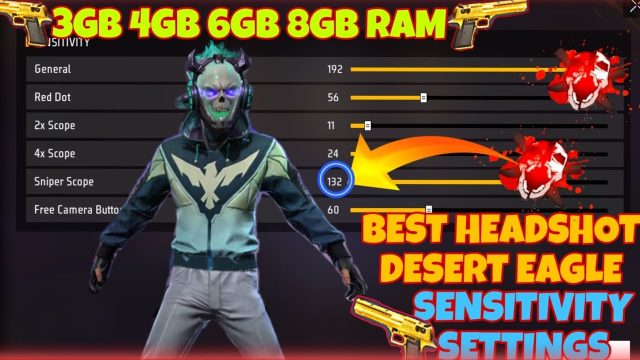
Before we fine-tune, you need a clean slate. Go to Settings > Sensitivity and tap ‘Reset to Default’. Now, let’s break down what each slider actually does: General sensitivity controls all your movement and non-ADS camera speed; Red Dot, 2x, 4x, Sniper, and Free Look affect those specific scopes; and DPI is set outside the game in your phone’s developer options. If you haven’t adjusted your DPI yet, check out our guide on Free Fire sensitivity settings with developer options for a proper baseline.
Most pros run a DPI between 320 and 600 for a balance of speed and control. If your phone supports it, set DPI to 400 as a starting point. That’ll give you a consistent reference that translates well across most devices.
Step 2: Set Your Base Sensitivity (General, Red Dot, 2x)
These three sliders handle 90% of your engagements. Start with this layout: General – 85, Red Dot – 80, 2x – 70. Why? General needs to be high for fast 360s and looting, but not so high you lose control. Red Dot and 2x are for close-to-mid range; you need enough speed to track while sliding, but fine enough to land headshots. If you find yourself over-flicking, drop Red Dot by 2-3 points. If you’re too slow to react, bump it up.
Jump into training ground, grab an M1014 or MP40 (both force you to flick), and practice snapping onto the stationary dummy from 10-15 meters. Adjust until you can hit center mass 8 out of 10 times without overshooting.
Step 3: Fine-Tune Your Long-Range Scopes (4x, Sniper, Free Look)
For 4x and Sniper, lower values give more stability. Start at 40 for 4x and 30 for Sniper. Free Look can stay around 60 for quick map awareness. The key is micro-adjustments: if you’re missing shots because the crosshair wobbles, reduce by 5; if you can’t track a running enemy at 100m, increase by 3. Pro tip: disable aim assist for snipers – it often pulls you away from the head hitbox. Our accurate Free Fire sensitivity settings guide dives deeper into this.

Step 4: Calibrate for Your Playstyle (Drag Shot, Camping, Rush)
Your sensitivity isn’t one-size-fits-all. If you’re an aggressive rusher, you’ll want higher general and Red Dot values (90-95) to win close-quarter fights. If you prefer a camping or passive style, lower values (75-80) keep your crosshair steady. For drag shooters, the technique relies on a consistent vertical flick – we recommend checking out the latest Free Fire sensitivity settings for drag shot to get a proven preset. Once you’ve chosen a path, practice the same movement 10 minutes daily until it becomes automatic.
Step 5: Test in Real Matches and Iterate
Training ground can only take you so far. Hop into a Clash Squad or Classic match and pay attention to these signals: Are you losing gunfights because you’re overcorrecting? Lower general or Red Dot by 2-3. Can’t track an enemy sliding? Bump up by 3. Record a few matches and watch them in slow motion – you’ll spot when the crosshair jitters or when you’re consistently aiming too high. That’s your feedback loop. Keep tweaking one slider at a time until the game feels like an extension of your hand.
If you ever mess up or want to try a different profile, you can easily import Free Fire sensitivity settings from a config code. That’s faster than manual input and lets you test presets from known pros.
Common Pitfalls
- Copying pro settings blind – Your device, DPI, and finger size are different. Always use a preset as a starting point, then adjust. Our professional Free Fire sensitivity settings guide offers a solid base, but you must fine-tune.
- Changing too many sliders at once – If you alter general, red dot, and 4x in one session, you won’t know what caused the improvement or regression. Change only one variable per play session.
- Ignoring DPI – Your phone’s DPI affects sensitivity more than any in-game slider. A wrong DPI makes any in-game tweak inconsistent. Spend 10 minutes setting DPI properly first.
Where to Next
You now have a sensitivity that actually works for you – not just a copy-paste of some streamer’s settings. But aiming is only part of the puzzle. Next, you might want to check out the best Free Fire sensitivity settings for beginners if you’re introducing a friend to the game, or dive into our Free Fire camera sensitivity settings to master free-look peeking. Keep practicing, and drop a comment if you found the sweet spot. See you in the lobby.