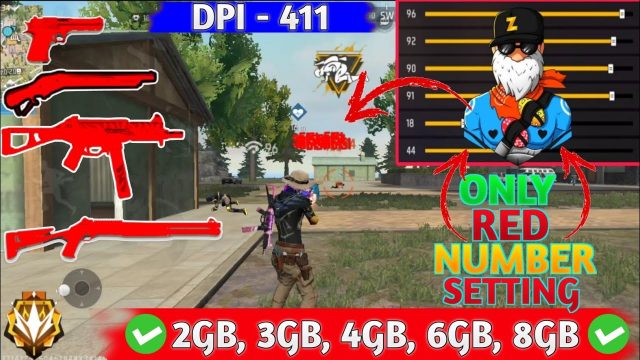
So you’re a Free Fire player and you’ve heard people talk about DPI — but what is it, and how can it help your aim? DPI (dots per inch) controls how many pixels your finger moves across the screen per inch of physical movement. By tweaking DPI, you can make your touches more responsive or more controlled. Pair that with the right in-game sensitivity, and you’ll land shots like a pro. This guide walks you through the entire process, from checking your current DPI to fine-tuning your Free Fire settings. By the end, you’ll have a setup that feels natural and gives you a serious edge in matches.
This guide is perfect for anyone who’s already tried the basic sensitivity sliders but still feels like their aim is off. Maybe your screen feels too jumpy, or you have to swipe too far to turn around. DPI changes can solve both. We’ll keep it casual and step-by-step, so even if you’ve never touched developer options before, you’ll be fine. Ready to get that perfect aim? Let’s go.
What You’ll Need
- A smartphone or tablet running Android (iOS doesn’t allow easy DPI changes without jailbreak; Android users can do it in Developer Options or with a third-party app like ‘DPI Changer’).
- Free Fire installed and updated to the latest version.
- At least 15 minutes of free time to test and adjust.
- A notepad or notes app to record your numbers — trust me, it helps.
Step 1: Understand How DPI and Sensitivity Work Together
DPI is a system-level setting that affects your whole phone, while Free Fire’s sensitivity sliders are game-specific. Think of DPI as the foundation and in-game sensitivity as the fine-tuning. If you raise your DPI, your touches become more sensitive — you need less finger movement to move the crosshair. But if you keep your in-game sensitivity the same, the aim may become too fast and hard to control. That’s why you always adjust both together.
The key is to find a DPI that feels comfortable for your finger size and play style, then lower or raise Free Fire sensitivity to compensate. A good starting point for most players is a DPI between 400 and 500. If you have a larger screen (like a tablet), you might prefer 320–400. If you’re on a small phone and want quick flicks, try 500–600.
Step 2: Find Your Current DPI
Before changing anything, check your device’s current DPI. Go to Settings > About Phone > tap ‘Build Number’ seven times to unlock Developer Options. Then go to Developer Options and look for ‘Smallest width’ (this is the DPI in dp, but it’s practically the same for our purposes). Note the number. Most phones are around 360–480 by default. Write it down.

If you can’t find it, use a third-party app like ‘DPI Changer’ from the Play Store. It shows your current DPI and lets you change it easily (no root needed for most devices).
Step 3: Choose Your New DPI
Now decide what DPI you want. If you feel your aim is sluggish or you have to swipe too far, increase DPI by 40–60 points. If everything feels too twitchy, decrease by 20–40. Don’t go crazy — changing DPI by more than 100 at once can make your UI tiny or huge and cause lag. For Free Fire, I recommend staying between 380 and 520 for most phones.

Apply the new DPI via Developer Options or the app. You’ll see the phone’s UI change size — icons get smaller if you increase DPI, larger if you decrease. That’s normal. Launch Free Fire and test your aim in the training ground. Does it feel better? If not, tweak in small steps.
Step 4: Adjust Free Fire Sensitivity to Match Your New DPI
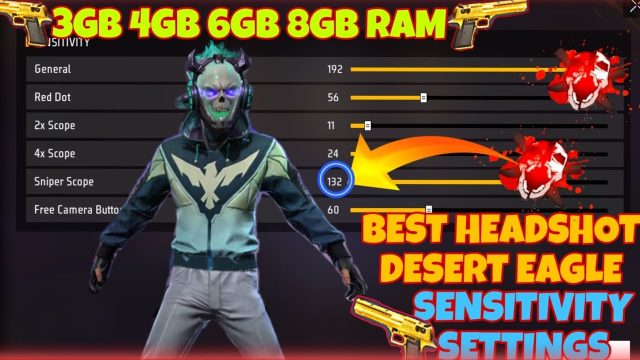
Once your DPI is set, open Free Fire and go to Settings > Sensitivity. You’ll see sliders for General, Red Dot, 2x Scope, and so on. If you increased DPI, you’ll want to lower these numbers to prevent over-aiming. A safe baseline after a moderate DPI increase (say from 400 to 460) is: General 75–80, Red Dot 65–70, 2x Scope 55–60, 4x Scope 45–50, Sniper Scope 30–35. Remember, these are starting points — your perfect numbers may vary.
If you decreased DPI, you’ll need to raise sensitivity to keep the same turn speed. For example, going from 480 to 420 might require General 85–90, Red Dot 75–80. There’s no exact formula, but as a rule of thumb, if your DPI changes by 10%, adjust sensitivity by about 5% in the opposite direction.
Step 5: Test and Fine-Tune in Training Ground
Head to the training ground. Pick your favorite weapon (like M1014 or SCAR) and practice spraying at walls, tracking moving targets, and doing quick 180-degree turns. Pay attention to how much you swipe to get a full rotation. You want to be able to do a 180 with about half a screen swipe — any more and your sensitivity is too low, any less and it’s too high.
Tweak the in-game sensitivity in small steps (5% at a time) until your aim feels smooth and natural. It might take 10–15 minutes, but it’s worth it. If you want a more automated method, check out the free fire sensitivity settings helper tool online — it suggests values based on your DPI and device.
Common Pitfalls
- Setting DPI too high: Anything above 600 on a regular phone makes the UI tiny and can introduce input lag. Your aim becomes jittery and hard to control. Stick to 380–520 unless you have a very large screen.
- Forgetting to adjust in-game sensitivity after changing DPI: Many players change DPI and wonder why their aim feels off. Always recalibrate Free Fire sensitivity — it’s not a one-and-done.
- Not checking device compatibility: Some Chinese or older Android phones ignore DPI changes in Developer Options. Test with a DPI changer app first. If nothing changes, your device may not support it without root.
Where to Next?
Now that you’ve dialed in your DPI and sensitivity, you can start experimenting with specialized setups. For example, check out our pro free fire sensitivity settings if you want to copy what the top players use. Or look into free fire sensitivity settings for camera control if you want finer adjustments for scopes. And if you’re on a tablet, our free fire sensitivity settings for tablet players guide will help you optimize further. Happy gaming!