So you’ve been tweaking your Free Fire sensitivity settings but nothing feels quite right – either your crosshair zips past enemies or it’s too sluggish to track targets. This guide is for players who want a balanced DPI setting that works on most phones, offering smooth enough movement for close-range drag shots while keeping enough precision for long-range sprays. By the end, you’ll have a solid baseline sensitivity value for each scope, plus a process to fine-tune them in Training Mode.
Balanced DPI (usually 100–200 range on Android, or a comfortable mouse DPI for emulator users) is the sweet spot where you don’t need to lift your finger repeatedly to do a 180° turn, yet you still have fine control over your aim. We’ll use the classic ‘medium DPI’ approach that most pro players recommend. I’ll walk you through adjusting your in-game sensitivity sliders, testing in the firing range, and making small tweaks until your muscle memory clicks.
What You’ll Need
- A smartphone (or emulator) with Free Fire installed
- Access to Developer Options (to confirm your device’s DPI if needed)
- 10–15 minutes of uninterrupted practice time in Training Mode
- A notebook or notes app to record your settings
- Patience – finding the perfect balance takes a few rounds of testing
Step 1: Set Your Device DPI
Balanced sensitivity starts with the base DPI of your screen. On Android, go to Settings > About Phone > tap ‘Build Number’ 7 times to unlock Developer Options. Then go to Settings > Developer Options > find ‘Smallest width’ or ‘DPI’. The default is usually around 420–480. For balanced sensitivity, leave it as is – don’t lower it below 400 or raise above 600. If you’re on an emulator, set your virtual mouse DPI to 800–1200. This step ensures your in-game sensitivity scaling behaves consistently.

Why does this matter? Your device’s DPI affects how many pixels your finger crosses per millimeter of swipe. A very low device DPI makes the game feel faster than expected, while a high one makes it sluggish. By keeping it in the mid range, you give yourself a clean starting point for the in-game sliders. If you’re on an older device, you can also check out our guide on low DPI sensitivity for more tailored advice.
Step 2: Open Sensitivity Settings
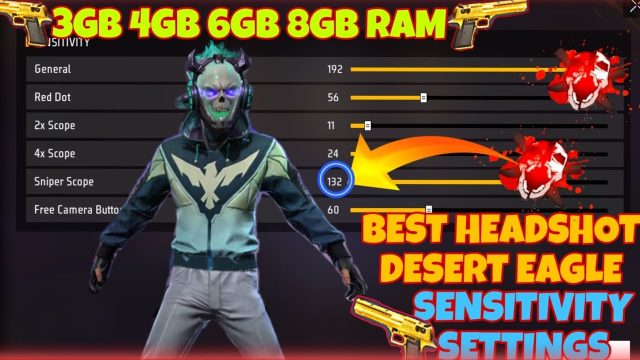
Launch Free Fire and tap the gear icon on the main screen. Go to ‘Sensitivity’ – you’ll see separate sliders for General, Red Dot, 2x Scope, 4x Scope, Sniper Scope, and Free Look. These percentages determine how fast your view rotates when you swipe. We’ll start with a balanced baseline for each.
Use these starting values (they work for most devices with default DPI): General – 80, Red Dot – 60, 2x Scope – 50, 4x Scope – 40, Sniper Scope – 30, Free Look – 70. These are not final – you’ll adjust them in the next step. Write them down. If you prefer a different scope-heavy style, check our camera sensitivity guide for alternative setups.
Step 3: Test in Training Mode
Enter Training Mode and aim at the moving targets. Start with the General sensitivity: swipe from left to right and see if you can smoothly track a target running at mid range. If your crosshair overshoots, lower the value by 5; if it lags behind, increase by 5. Repeat for each scope. The goal is to do a quick 180° turn with a single comfortable swipe – that means you can flick to an enemy behind you without lifting your finger.
Spend 5 minutes on close-range targets (within 10m) using Red Dot and General sensitivities. Then try long-range stationary targets with 4x and sniper scopes. Your scope sensitivities should be low enough that you can pinpoint a head from across the map but high enough to still drag slightly. If you play without gyroscope, our no gyro settings guide might help too.
Step 4: Fine-Tune and Save
Once you have a set of values that feel comfortable, play a few classic matches in casual mode. Don’t be afraid to change one slider at a time based on real-game experience. For example, if you lose close-range fights because you can’t flick fast enough, increase General by 5. If your sniper shots are always a pixel off, decrease Sniper Scope by 5. Keep a log of what works and what doesn’t.
Remember, everyone’s finger size, screen sensitivity, and grip are different. That’s why many players compare community settings to see what others use. Don’t copy blindly – use them as a reference. Also, check out our beginner-friendly settings if you’re just starting, or the best sensitivity settings for a more advanced baseline.
Common Pitfalls
- Changing too many sliders at once: You won’t know which change affected your aim. Adjust only one scope per match and test it thoroughly.
- Ignoring device DPI: If your phone has a very high or very low DPI, your in-game sensitivities will feel off. Always verify your DPI first.
- Copying pro settings without adaptation: Pros use different screen sizes and grips. Their 60 might feel like 90 on your device. Always start with a baseline and tweak.
Where to Next
Now that you have a balanced DPI configuration, keep refining it as you rank up. Combine it with proper crosshair placement and movement techniques. For more advanced tweaks, explore our guides on after season reset settings or drag shot settings. Good luck out there!